


Cloud Computing Training
in Bommanahalli
Master Cloud Computiing Training with ScholarLogic’s industry-focused Cloud Computing Course in Bommanahalli. Learn directly from cloud professionals, work on real-time projects, and build the skills required to crack cloud certification exams with confidence. With dedicated placement support and hands-on labs, you’ll be job-ready for top cloud roles across leading IT companies.
Our Cloud Computing Training in Bommanahalli covers everything. Pay after placement available


Trusted by 1000+ learns and

hiring partners across India

15+ Hours of Immersive
Practical Training at Scholarlogic
Interactive leaarning Led by
Experienced Working professionals
An industry-leading
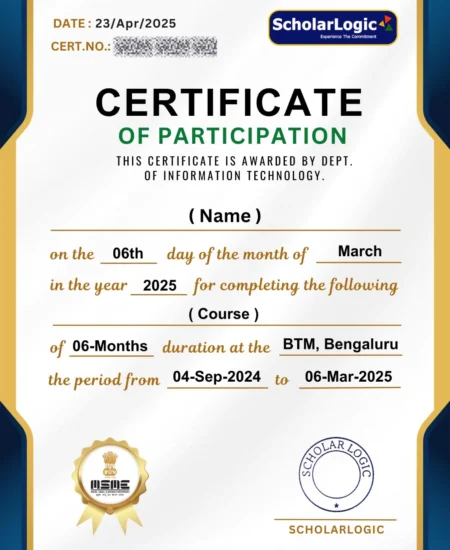
Certificate by ScholarLogic
Why Choose Our Cloud Computing Training in Bommanahalli ?
- Why Scholar Logic
- Expert Trainers - Real-time industry experts
- Personalised Learning - 1:1 mentorship + doubt clearing + practice sessions
- Small Class Sizes - 10 to 15 Max
- What You Will Learn
- Comprehensive Curriculum – AWS + DevOps tools
- Updated Course Material – Industry-standard syllabus
- Live Tools – EC2, S3, Lambda, Jenkins, Docker, Kubernetes, Terraform
- Hands-On Learning
- Hands-on Learning – Practical labs
- Industry-Relevant Projects – 2–3 real-world projects
- Cloud Deployment Practice – CI/CD pipelines, containerization, monitoring
- Certification & Job Assistance
- AWS Certification Preparation
- Mock Tests + Interview Prep
- Job Assistance – Resume building, interview prep
- Placement Support – Companies you tie-up with
Cloud Computing Curriculum
Topics to be covered
- Linux
- Api
- Information Security
- Devops
Linux
Module 1: Introduction to Linux for Cloud Computing
What is Linux? Why is it important for Cloud Computing?
Linux Distributions (Ubuntu, CentOS, RHEL, Debian, Amazon Linux)
Cloud-based Linux vs. Traditional Linux
Installing and Setting Up Linux in Cloud (AWS, Azure, GCP)
Module 2: Linux Command Line & Shell Scripting
Basic Linux Commands (ls, cd, cp, mv, rm, cat, grep, find)
File and Directory Permissions (chmod, chown)
User and Group Management
Process Management (ps, top, kill, nice)
Bash Scripting for Automation
Module 3: Linux System Administration in Cloud
Managing Linux Instances on AWS (EC2), Azure (VMs), GCP (Compute Engine)
Package Management (apt, yum, dnf, snap)
File Systems & Disk Management (ext4, XFS, LVM)
Configuring Network and Firewall (iptables, ufw, firewalld)
Logging and System Monitoring (journalctl, dmesg, syslog)
Module 4: Linux Security in Cloud Environments
Secure SSH Access & Key Management
SELinux & AppArmor for Cloud Security
Implementing Firewalls and Network Security Groups (NSG)
Security Hardening Best Practices
Cloud Identity & Access Management (IAM)
Module 5: Linux Automation & DevOps Tools
Infrastructure as Code (IaC) with Terraform and Ansible
Automating Linux Configuration with Cloud-Init
Using Systemd for Service Management
Log Analysis with ELK Stack (Elasticsearch, Logstash, Kibana)
Cloud DevOps Tools (Jenkins, Docker, Kubernetes)
Module 6: Linux Storage & Databases in Cloud
Cloud Storage Services (AWS S3, Azure Blob, Google Cloud Storage)
Mounting and Managing Cloud Disks (EBS, Azure Disks, Persistent Disks)
Managing Databases in Cloud (MySQL, PostgreSQL, MongoDB)
Backup & Disaster Recovery Strategies
Module 7: Linux Performance Tuning & Troubleshooting
Analyzing System Performance (htop, iostat, vmstat)
Kernel Optimization for Cloud Workloads
Debugging Cloud-Based Linux Issues
Log File Analysis and Troubleshooting
Module 8: Linux in Multi-Cloud and Hybrid Cloud
Managing Linux Workloads in Multi-Cloud Environments
Hybrid Cloud Linux Administration
Cloud Networking & VPNs (AWS VPC, Azure Virtual Network)
Migrating Linux Workloads to Cloud
Module 9: Hands-on Projects & Case Studies
Setting up a Linux Web Server on AWS/GCP/Azure
Automating Server Provisioning with Terraform & Ansible
Configuring Secure Linux Access for Cloud-Based Workloads
Performance Monitoring and Optimization in Cloud Linux Environments
Deploying a Kubernetes Cluster on Linux Servers
Api
Module 1: Introduction to Cloud APIs
What is an API?
Role of APIs in Cloud Computing
RESTful APIs vs. SOAP APIs
JSON vs. XML in Cloud APIs
Authentication Methods (API Keys, OAuth, JWT)
API Rate Limiting and Throttling
Module 2: Cloud API Service Providers Overview
AWS APIs (EC2, S3, Lambda, IAM)
Google Cloud APIs (Compute Engine, Storage, BigQuery)
Microsoft Azure APIs (Virtual Machines, Storage, Identity)
IBM Cloud and Oracle Cloud APIs
Comparing Cloud API Services
Module 3: API Development & Integration
API Request and Response Cycle
REST API Methods (GET, POST, PUT, DELETE)
Using Postman for API Testing
API Documentation (Swagger, OpenAPI)
Best Practices for API Developmen
Module 4: Authentication and Security in Cloud APIs
OAuth 2.0 and OpenID Connect
API Gateway Security (AWS API Gateway, Azure API Management)
Token-Based Authentication (JWT, API Keys)
Role-Based Access Control (RBAC) in APIs
CORS Policy and API Security Best Practices
Module 5: AWS APIs in Depth
AWS SDK and CLI for API Calls
Working with AWS EC2 API
S3 API for Object Storage Management
AWS Lambda API for Serverless Computing
IAM API for User and Role Management
Module 6: Google Cloud APIs in Depth
Google Cloud SDK and REST APIs
Compute Engine API for VM Management
Google Cloud Storage API for Data Handling
BigQuery API for Data Analysis
Google Cloud Pub/Sub API for Messaging
Module 7: Microsoft Azure APIs in Depth
Azure REST API and SDKs
Azure Virtual Machines API
Azure Blob Storage API
Azure Identity API for Authentication
Azure Functions API for Serverless Execution
Module 8: API Management and Monitoring
API Gateway Services (AWS API Gateway, Azure API Management, Apigee)
Rate Limiting, Quotas, and Caching
API Monitoring and Logging (CloudWatch, Azure Monitor)
Troubleshooting API Errors
Module 9: Cloud API Automation & DevOps
Infrastructure as Code (Terraform, CloudFormation)
CI/CD Pipelines for API Deployment
Automating API Calls with Python, Node.js
API Performance Testing
Module 10: Case Studies and Hands-On Projects
Building a REST API using AWS Lambda and API Gateway
Deploying a Cloud-Native App with Google Cloud APIs
Secure Authentication with OAuth 2.0 and Cloud APIs
Real-World API Use Cases in Cloud Computing
Information Security
Module 1: Introduction to Cloud Security
Basics of Cloud Computing and Security Challenges
Shared Responsibility Model in Cloud Security
Security Risks in Cloud Environments
Cloud Security vs. Traditional IT Security
Compliance and Regulatory Concerns (GDPR, HIPAA, ISO 27001, SOC 2)
Module 2: Cloud Security Architectures
Cloud Security Frameworks (NIST, CSA)
Security Models for Public, Private, Hybrid Clouds
Cloud Security Posture Management (CSPM)
Zero Trust Security Model in Cloud
Module 3: Identity and Access Management (IAM)
Authentication & Authorization in Cloud
Role-Based Access Control (RBAC) & Attribute-Based Access Control (ABAC)
Multi-Factor Authentication (MFA)
Identity Federation and Single Sign-On (SSO)
Cloud IAM Services (AWS IAM, Azure AD, Google Cloud IAM)
Module 4: Data Security in Cloud
Data Encryption Techniques (AES, RSA)
Data Masking, Tokenization, and Obfuscation
Cloud Storage Security (S3, Blob, Google Cloud Storage)
Secure Data Sharing in Cloud
Data Loss Prevention (DLP) Strategies
Module 5: Network Security in Cloud Computing
Virtual Private Cloud (VPC) Security
Firewalls and Intrusion Detection Systems (IDS/IPS)
Secure Network Segmentation
Distributed Denial of Service (DDoS) Protection
Cloud-Based Web Application Firewalls (WAF)
Module 6: Security Threats and Vulnerabilities in Cloud
Common Cloud Threats (Misconfiguration, Insider Threats)
Malware, Ransomware, and Phishing in Cloud
API Security Vulnerabilities and Protection
Cloud Penetration Testing and Ethical Hacking
Module 7: Cloud Security Monitoring & Incident Response
Cloud Security Information and Event Management (SIEM)
Log Management and Threat Intelligence
Security Automation and Orchestration (SOAR)
Incident Detection, Response, and Recovery in Cloud
Forensic Investigation in Cloud
Module 8: Compliance and Legal Issues in Cloud Security
Cloud Security Compliance Standards (SOC 2, PCI DSS)
Data Privacy Laws (GDPR, CCPA)
Auditing and Security Assessments in Cloud
Legal and Ethical Concerns in Cloud Security
Module 9: Cloud Security Best Practices and DevSecOps
Secure DevOps (DevSecOps) in Cloud Environments
Security as Code (IaC Security)
Secure Software Development Lifecycle (SDLC)
Continuous Security Monitoring and Policy Enforcement
Module 10: Case Studies and Hands-on Projects
Implementing Cloud IAM and MFA Security
Securely Configuring Cloud Storage Services
Deploying Web Apps with Cloud WAF and Security Groups
Performing Cloud Security Audits and Compliance Checks
Real-world Incident Response in Cloud Security
Devops
Module 1: Introduction to Cloud DevOps
What is DevOps? DevOps vs Traditional IT
Role of DevOps in Cloud Computing
DevOps Lifecycle (Plan, Develop, Build, Test, Release, Deploy, Operate, Monitor)
Cloud-Native DevOps Practices
Key Cloud DevOps Tools Overview (Terraform, Kubernetes, Jenkins, Docker)
Module 2: Cloud Infrastructure and Automation
Infrastructure as Code (IaC) – Concept & Benefits
Introduction to Terraform, CloudFormation, ARM Templates
Automating Infrastructure Deployment (AWS, Azure, GCP)
Configuration Management Tools (Ansible, Puppet, Chef)
Serverless Computing and Automation (AWS Lambda, Azure Functions)
Module 3: Continuous Integration & Continuous Deployment (CI/CD) in Cloud
What is CI/CD? CI/CD Pipeline Overview
CI/CD in AWS (CodePipeline, CodeDeploy, CodeBuild)
CI/CD in Azure (Azure DevOps, GitHub Actions)
CI/CD in Google Cloud (Cloud Build, Cloud Deploy)
Automated Testing in CI/CD Pipelines
Canary and Blue-Green Deployments
Module 4: Containerization & Kubernetes in Cloud
Introduction to Containers (Docker)
Kubernetes Architecture and Components
Deploying Kubernetes Clusters in AWS (EKS), Azure (AKS), GCP (GKE)
Helm Charts and Kubernetes Configurations
Kubernetes Networking and Service Mesh (Istio, Linkerd)
Module 5: Cloud Security in DevOps (DevSecOps)
Introduction to DevSecOps: Security in CI/CD
Cloud Identity & Access Management (IAM)
Secrets Management (AWS Secrets Manager, HashiCorp Vault)
Security Scanning Tools (Snyk, Trivy)
Compliance as Code (Policy Enforcement with Open Policy Agent)
Module 6: Monitoring, Logging, and Performance Optimization
Cloud Monitoring Tools: AWS CloudWatch, Azure Monitor, Google Cloud Operations Suite
Log Management and Analysis (ELK Stack, Prometheus, Grafana)
Observability in Cloud DevOps
Performance Testing & Optimization
Incident Response and Disaster Recovery in DevOps
Module 7: Site Reliability Engineering (SRE) & Cloud Operations
Introduction to SRE in Cloud Computing
SLAs, SLOs, SLIs – Measuring Reliability
Auto-scaling and Load Balancing (AWS ALB, Azure Load Balancer, GCP Load Balancer)
Incident Management and Root Cause Analysis
Chaos Engineering for Fault Tolerance
Module 8: Multi-Cloud and Hybrid Cloud DevOps
Introduction to Multi-Cloud Strategies
Managing Hybrid Cloud Workloads with DevOps
CI/CD Pipelines for Multi-Cloud Deployment
Cloud Networking in Hybrid Environments
Cost Optimization Strategies in Multi-Cloud
Module 9: Hands-on Projects & Case Studies
Automating Cloud Infrastructure with Terraform & Ansible
Building a CI/CD Pipeline for a Cloud-Native Application
Deploying and Managing Kubernetes in AWS/GCP/Azure
Implementing Cloud Security in DevOps Pipelines (DevSecOps)
Monitoring and Performance Tuning in a Cloud-Based DevOps Environment
Cloud Certification Training Bommanahalli
Industry-Recognized Certification:
By completing this program, you’ll earn a respected Cloud Computing Training in Bommanahalli in that is widely acknowledged across the tech industry. It not only validates your skills but also strengthens your professional profile when approaching companies.
Strong Certification Credibility:
Our Cloud Computing Course in Bommanahalli holds real value in the job market. It reflects your dedication, hands-on learning, and the effort you’ve put into mastering the subject.
Global Acceptance:
The Best Cloud Computing Institute in Bommanahalli you receive is recognized internationally, giving you the flexibility to explore job opportunities both in India and abroad.

High Market Demand:
The skills covered in this course are currently in strong demand. Having this certification can open more doors and increase the number of interview calls you receive.
Boosts Career Growth:
Many students experience faster career growth after getting certified. It often leads to better job roles, promotions, and increased responsibilitie.
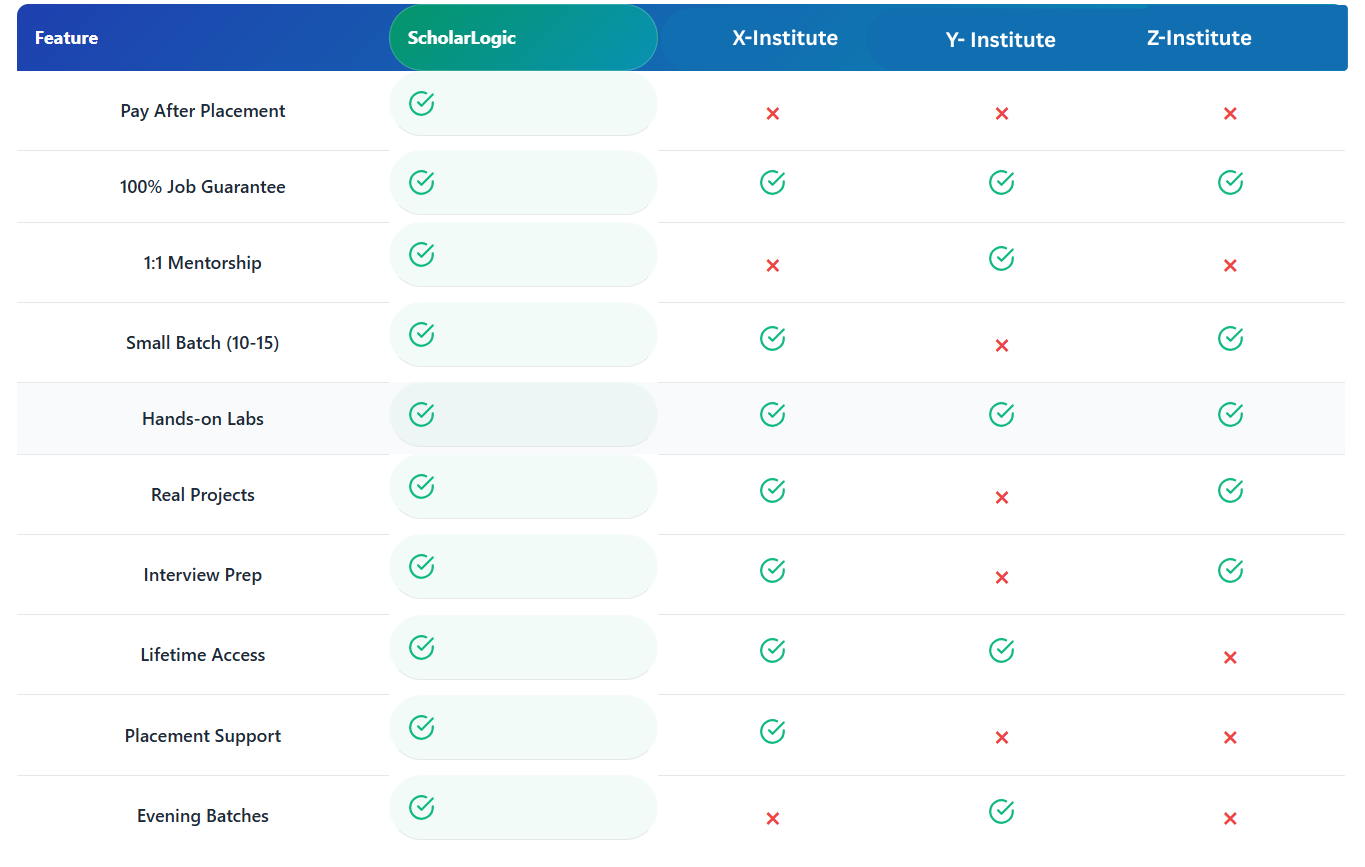
Why Scholar Logic?
Compare us with other training institutes in Bommanahalli
Ready to join the best Cloud Computing Training in Bommanahalli
?
Why Classroom Training Is Better Than Online?
15+ Case Studies & Assignments
Work on 15+ Case studies and Assignments with 24/7 Assignment support.
Industry Relevant Projects
Get Industrial experience by working on our Industry Relevant Live Projects.
Tied-up with 150+ Companies
ScholarLogic has Tied up with 150+ Companies to Provide Jobs to Many Students
Job Readiness Program
A dedicated placement cell for the participants who completed the course
Skills Covered
Linux
ApI
Programming Languages
Database Management skills
Information Security
DevOps
Tools & Technologies Covered
Cloud Service Providers
Amazon Web Services (AWS)
Cloud Networking & Security
Multi-Cloud & Hybrid Cloud Management
Configuration Management
Virtualization & Containerization
Linux
ApI
Programming Languages
Database Management skills
Information Security
Devops
Learning Path
Placement Assistance After Course Completion
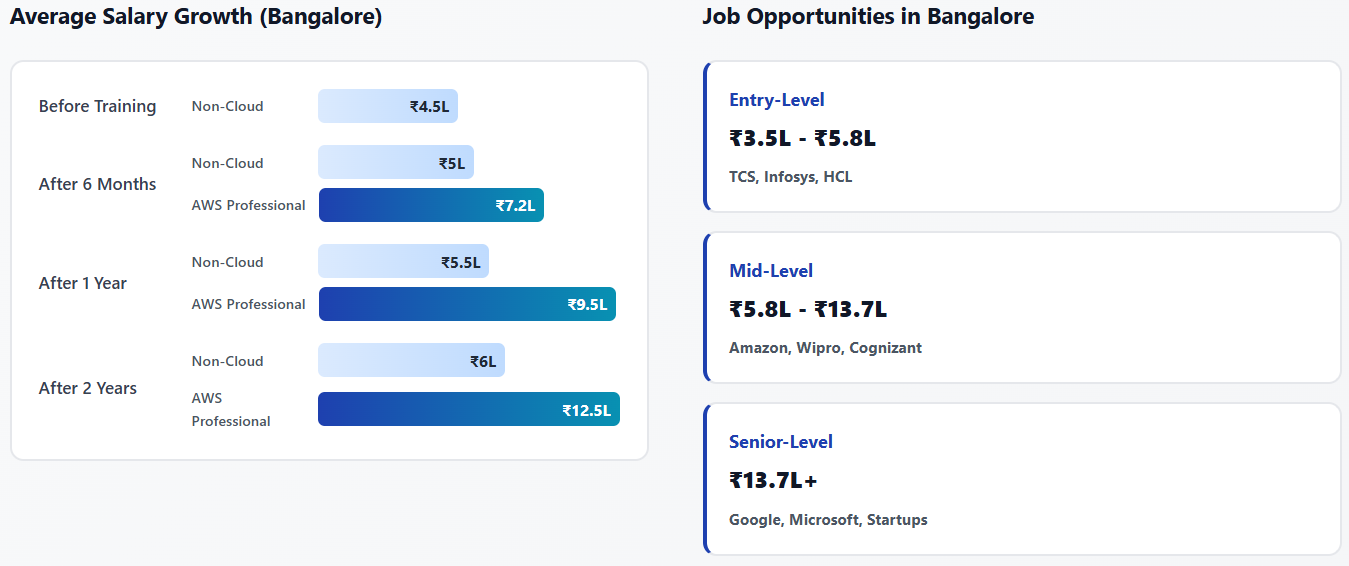
Salary Growth & Job Market
See how Cloud Computing Training in Bommanahalli
transforms earning potential in Tech Career
Who Can Join the Cloud Computing Course in Bommanahalli ?
- Graduates who have a keen interest in Java and want to strengthen their technical foundation while building a future in cloud computing can greatly benefit from this Cloud Certification Training Bommanahalli.
- IT professionals planning to shift their career towards AWS and DevOps will find this program ideal for gaining a strong, job-ready understanding of cloud technologies.
- Working professionals looking to grow in the IT field can use this training to build practical experience with AWS DevOps tools, automation, and real-time project workflows.
- Java developers, project leads, and managers who wish to transition into cloud and DevOps roles will find this course a smooth pathway toward modern technology adoption.
- Freshers who want to begin their career in AWS DevOps—one of the most in-demand skills in Bommanahalli’s IT market—can use this course as a strong starting point for excellent job opportunities.
- Professionals from non-programming backgrounds who want to shift into cloud technology can also join this Cloud Computing Training in Bommanahalli , as the course starts from fundamentals and gradually moves into advanced real-time concepts.
Book Your Free Class Now
The Application is free and takes only 5 minutes to complete
ScholarLogic The Best For
Experienced Faculty
Work Hands-on with 2+ Real Life Projects
Dedicated Placement cell for 100% Placement Assistance
Dedicated Case studies support team
24/7 Trainer Whatsapp Support
Lifetime eLearning access
Contact Our Team of Experts


From Learning to Earning Real Students Journey
What Our Students Have To Say about Us

ScholarLogic’s DevOps training provided clear insights into pipelines. The real-time tasks and mentor guidance quickly built my confidence and prepared me for the job.
Narayana Swamy
Student

The Python course was straightforward, practical, and well-organized. The hands-on exercises enhanced my coding skills and effectively prepared me for interviews.
David S
Student
AWS sessions were productive and focused on real projects. The trainer explained cloud concepts clearly, making complex topics easy to understand.
Dipen Bhangale
Student

Data analytics training covered SQL, Power BI, and Excel using real datasets. I gained confidence through practice labs and received strong placement support.
Harshith Vasanth
Student

The Java course effectively covered both basic and advanced concepts. Real-world examples and project guidance enabled me to master coding and approach interviews with confidence.
Rohit Gurjar
Student

The Front-End Development course at ScholarLogic was outstanding. The curriculum was up-to-date with the latest technologies, and the trainers made learning enjoyable. The projects were challenging but rewarding and the placement support was very effective.
Jidnyesh Sachin Patil
Student

ScholarLogic’s DevOps course provided an excellent foundation for my career. The trainers were experts in the field, and the course content was up-to-date and relevant. The placement support was effective, and I was able to secure a job shortly after completing the course.
Golu Tekade
Student

Scholarlogic is best for learning it field and teaching was excellent and I have learned Devops and this institute helpful for students ,it is overall good experience for me, the way of teaching and solving doubts and guiding me was good😊
Veeresh
Student

The way of teaching is so good for me the teaching is so clean and neat easily understood. They help me clear all my doubts anyway it is a good experience in my life Like
Brijesh
Student

I recently completed a course at ScholarLogic Training Institute, and I must say, it exceeded all my expectations. From start to finish, the experience was nothing short of exceptional.
Dayanand
Student
"Fantastic coaching classes! Great instructors, and personalized attention. Highly recommend!" Thank you Scholarlogic
Shrivathsa M
Student
I have completed my cloud computing course recently I had good experience in scholar logic and the trainers are very friendly.
Pandurang Hundekar
StudentFrequently Asked Questions
Who can apply for this training?
Anyone interested in AWS and DevOps! Whether you’re a fresher, IT professional looking to switch, or someone from a non-technical background – we have the right program for you. No prior AWS experience required.
Do I need to have IT background?
No. We have students from various backgrounds – IT, finance, operations, even non-technical fields. Our curriculum is designed for beginners but also challenging for experienced professionals.
Is 100% job guarantee really true?
Yes! If you complete the course and don’t get placed within 6 months, we refund 100% of your fees. Our guarantee is backed by 150+ company partnerships and proven placement track record.
How does Pay After Placement work?
You pay ₹0 upfront. Start paying only after you get a job with minimum ₹3.5L annual salary. Payments are split into 3 installments over 6 months after placement.
What is the duration of the course?
150+ hours of intensive training spread over 12-16 weeks depending on your batch schedule. Includes evening (6-9 PM) and weekend batches for working professionals.
How many students are in each batch?
Small batches of 10-15 students maximum. This ensures personalized 1:1 mentorship and individual attention from trainers.
Will I get any certification?
Yes! You’ll get ScholarLogic certification. We also prepare you for AWS Solutions Architect Associate certification. You can take the official AWS exam separately.
How is the placement process conducted?
Our dedicated placement cell conducts resume reviews, mock interviews, LinkedIn optimization, and direct referrals to 150+ companies. You’ll have 24/7 support from mentors throughout the process.
What's the average time to get placed?
Most of our students get placed within 2-4 months of course completion. We provide placement support for up to 6 months after course ends.
What If I Miss A Live Session?
- Not a problem even if you miss a live Data Science session for some reason. Every session will be recorded and access will be given to all the videos on ScholarLogic state-of-the-art Learning Management System (LMS). You can watch the recorded Data Science sessions at your own pace and convenience.